Musicality in Hip Hop Dance Isn't a Talent You Either Have or Don't
Musicality — the sense of moving in genuine conversation with the music rather than just on the beat — gets talked about as an innate gift some dancers simply have and others simply don’t, and that framing misses that musicality actually breaks down into several genuinely learnable, separately trainable component skills.
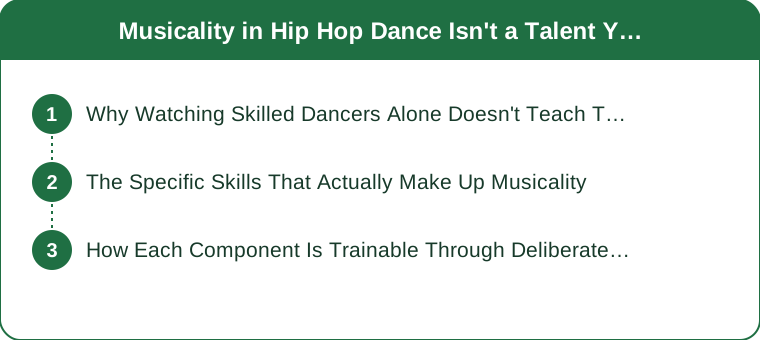
Why Watching Skilled Dancers Alone Doesn’t Teach These Component Skills
The passive-observation gap: the watching-experienced-dancers-shows-the-combined-output-of-both-skills-at-once-without-revealing-which-component-is-actually-happening-when (the passive act of watching a skilled dancer only ever showing the combined, fluid output of both component skills at once, without making clear which specific component — identification or translation — is actually driving any given moment, limiting how much can genuinely be learned from observation alone, per the dance-battle-culture-guide logic — the passive-act-of-watching-a-skilled-dancer-only-showing-the-combined-fluid-output-of-both-skills-at-once-without-revealing-which-specific-component-is-driving-any-given-moment), and the frame (the observation gap as watching alone showing the result but not the separable process — a reason deliberate, isolated component practice teaches faster than observation and imitation alone).
The Specific Skills That Actually Make Up Musicality
The component breakdown: the beat-and-rhythm-identification-is-a-distinct-listening-skill-separate-from-movement-execution-itself (the ability to actually identify and internally track the beat, accents, and rhythmic structure of a piece of music being a genuinely distinct listening and processing skill, separate from the movement execution skill that gets built on top of it, per the hip-hop-dance-grooves-and-bounce-guide logic — the ability-to-actually-identify-and-internally-track-beat-accents-and-rhythmic-structure-being-a-genuinely-distinct-listening-and-processing-skill-separate-from-the-movement-execution-built-on-top-of-it), the the-translating-an-identified-rhythmic-element-into-a-specific-movement-choice-in-real-time-is-a-second-separate-skill-from-identification-itself (the actual translation of an identified beat or accent into a chosen movement response happening in real time being a second, genuinely distinct skill from simply hearing the rhythmic structure correctly in the first place, per the hiphop-dance-musicality-guide logic — the actual-translation-of-an-identified-beat-or-accent-into-a-chosen-real-time-movement-response-being-a-second-genuinely-distinct-skill-from-simply-hearing-the-rhythmic-structure-correctly), and the frame (the component skills as rhythmic identification and real-time movement translation, two genuinely separate abilities that combine to produce what reads externally as one unified ‘musicality’ — meaning the perceived single talent is actually a composite of trainable parts).
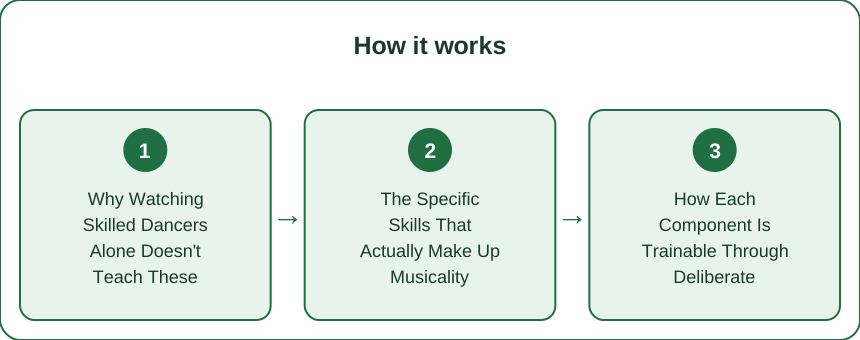
How Each Component Is Trainable Through Deliberate Practice
What actually builds each skill: the train-rhythmic-identification-through-focused-listening-exercises-separate-from-any-movement-at-all (the practicing focused listening specifically — clapping or counting along to identify accents and structure without any movement involved at all — building the identification skill in isolation before combining it with movement, per the hiphop-freestyle-confidence-guide logic — the practicing-focused-listening-specifically-without-any-movement-involved-at-all-builds-the-identification-skill-in-isolation-before-combining-it-with-movement), the the-train-movement-translation-through-slowed-down-practice-connecting-a-specific-identified-accent-to-a-specific-chosen-movement-repeatedly (the deliberately slowing down practice tempo specifically to connect an identified musical accent to a chosen movement response repeatedly, building the translation skill at a pace that allows conscious repetition before attempting it at full speed, per the hip-hop-dance-for-beginners-getting-started-guide logic — the deliberately-slowing-down-practice-tempo-specifically-to-connect-an-identified-accent-to-a-chosen-movement-response-repeatedly-builds-the-translation-skill-at-a-pace-allowing-conscious-repetition-before-full-speed), and the frame (the training approach as building rhythmic identification through pure listening practice separate from movement, and building movement translation through deliberately slowed-down practice connecting identified accents to chosen movements — training the two component skills separately before expecting them to combine fluidly at full speed, the same way any composite skill gets built).
Musicality in dance isn’t one innate gift but actually breaks down into at least two genuinely separate, trainable component skills — the ability to identify and internally track a piece of music’s beat, accents and rhythmic structure is a distinct listening and processing skill, and translating an identified rhythmic element into a chosen real-time movement response is a second, separate skill built on top of that identification. Training each component means practicing focused listening exercises, like clapping or counting along to identify accents, entirely separate from any movement to build identification skill in isolation, and deliberately slowing down practice tempo specifically to connect an identified accent to a chosen movement repeatedly, building the translation skill at a pace that allows conscious repetition before ever attempting it at full speed — training the composite skill’s separate parts individually rather than expecting them to combine fluidly from the start.
Keep Reading
This article is for general informational and styling purposes only. Fit, sizing, and product availability may vary.