Why Knowing the Steps Isn't the Same as Actually Dancing to the Music
Quick Answer: Musicality is dancing the feel of the music — accents, pauses, and texture in the sound — not just landing steps on the correct counts. Practicing to a variety of songs, not just class choreography, is what actually builds it.
You’ve drilled the combo until every step lands on the right count, and it still looks and feels flat compared to dancers who seem to be dancing with the song instead of just on top of it. That gap has a name, and it’s trainable.
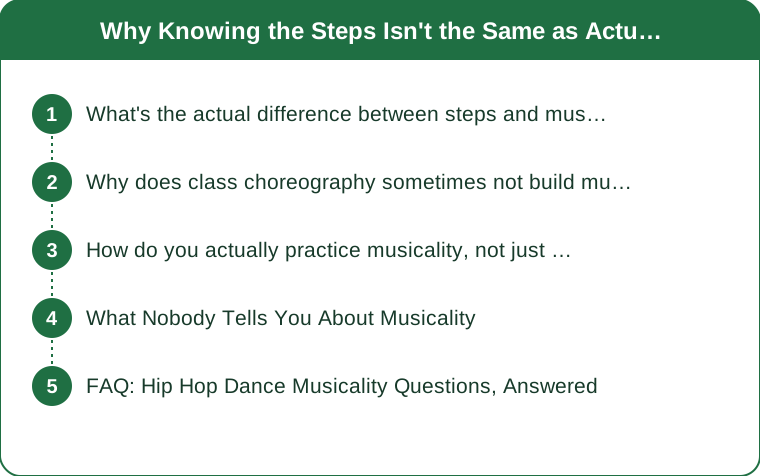
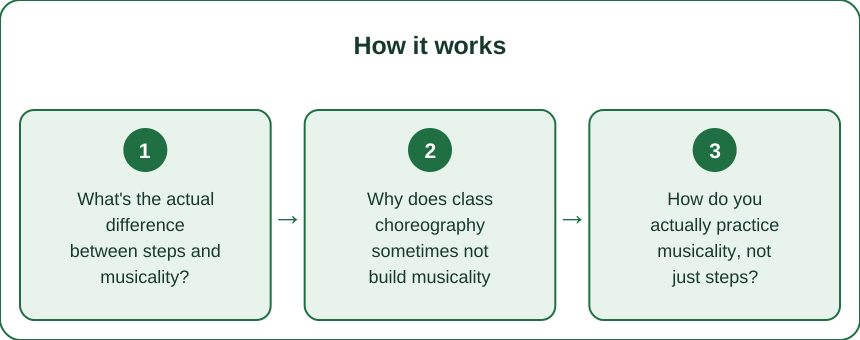
What’s the actual difference between steps and musicality?
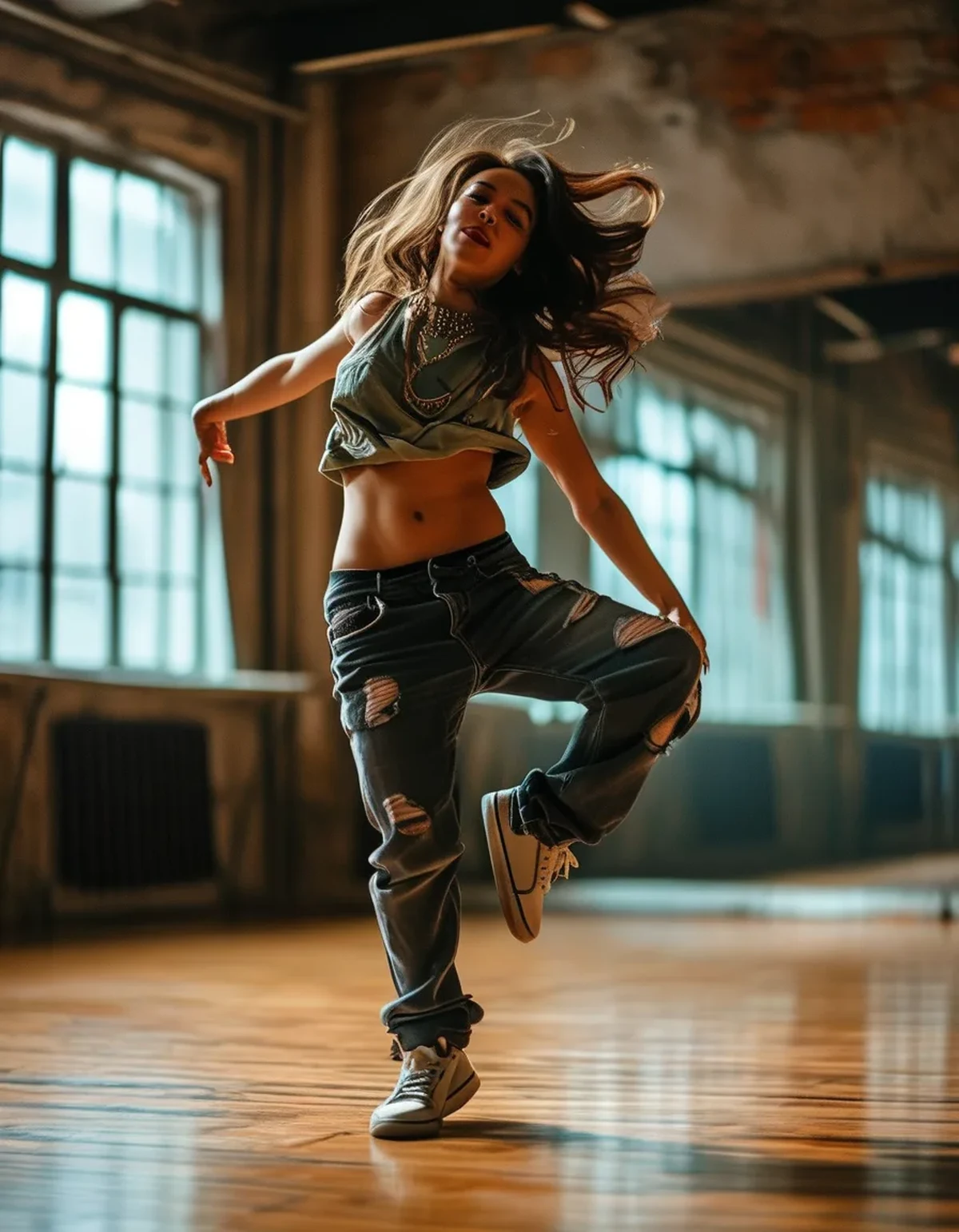
Steps are the what — the specific movements at specific counts. Musicality is the how — matching the texture of your movement to the texture of the sound: a sharp hit lands sharp, a smooth glide lands smooth, a pause in the music gets a pause in your body. Perfect steps with flat musicality look technically correct but emotionally empty.
Why does class choreography sometimes not build musicality on its own?
Class choreography is usually set to one specific song, which trains you to memorize where movements go in that song rather than training the more transferable skill of listening and responding to musical texture in general — the choreography can become the crutch instead of the music itself.

How do you actually practice musicality, not just steps?
Practice the same combo to 3-4 different songs with different tempos and textures. If the movement still feels right when the music changes, you’re dancing musicality; if it only worked with the original song, you were dancing to memorized counts, not to sound.
What Nobody Tells You About Musicality
Nobody tells you that musicality often improves faster from just listening — really listening, isolating drum hits, vocal accents, and silences in a song without moving at all — than from more physical drilling. Nobody tells you that freestyle, even bad freestyle, builds musicality faster than perfecting set choreography, because it forces real-time listening and response. And nobody tells you that advanced dancers still work on this — musicality isn’t a beginner-vs-advanced line, it’s a skill that keeps deepening at every level.
FAQ: Hip Hop Dance Musicality Questions, Answered
Can musicality be taught, or is it natural talent?
It’s a trainable skill — dancers who seem naturally musical have usually spent significant unstructured time simply listening to and moving to varied music, which is a practice, not just an innate gift.
Does freestyle help musicality more than choreography classes?
Both have value, but freestyle specifically forces real-time listening and response, which is the core of musicality — choreography classes build technique and vocabulary more than musical responsiveness.
How long does it take to notice improvement in musicality?
Many dancers notice a shift within a few weeks of deliberately practicing to varied music, though it continues developing meaningfully for years, even at an advanced level.
TL;DR:
- Musicality is matching movement texture to sound texture, not just counts
- Single-song choreography can train memorization instead of listening
- Test musicality by trying the same combo to different songs
- Freestyle and active listening build it faster than more drilling
Steps get you moving on time — musicality is what makes it look like dancing.
Keep Reading
This article is for general informational and styling purposes only. Fit, sizing, and product availability may vary.