Why the Wrong Sneakers Are Sabotaging Your Hip-Hop Dance Class
Quick Answer: Running shoes are built for forward momentum and cushioned heel-strike, which actively fights the pivots, slides, and quick directional changes hip-hop footwork demands — a flatter, more flexible sneaker with balanced grip (not maximum traction, not none) works significantly better.
You keep catching your foot mid-pivot or feeling like your sneakers are ‘fighting’ the move, and you’ve assumed it’s a coordination problem. Often, it’s actually a shoe problem — your running shoes are doing exactly what they’re designed to do, which happens to be the opposite of what hip-hop footwork needs.
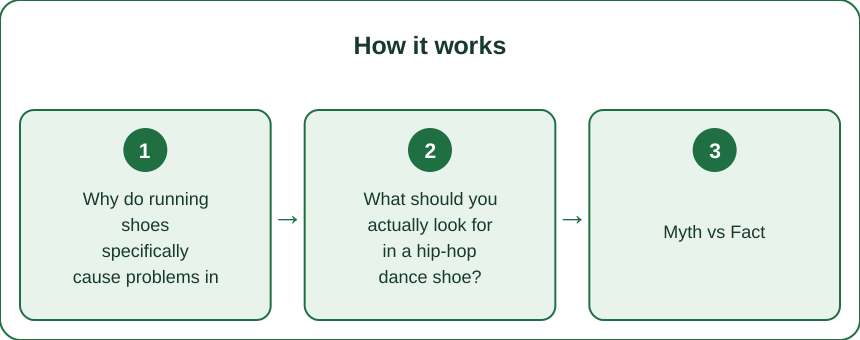
Why do running shoes specifically cause problems in hip-hop class?
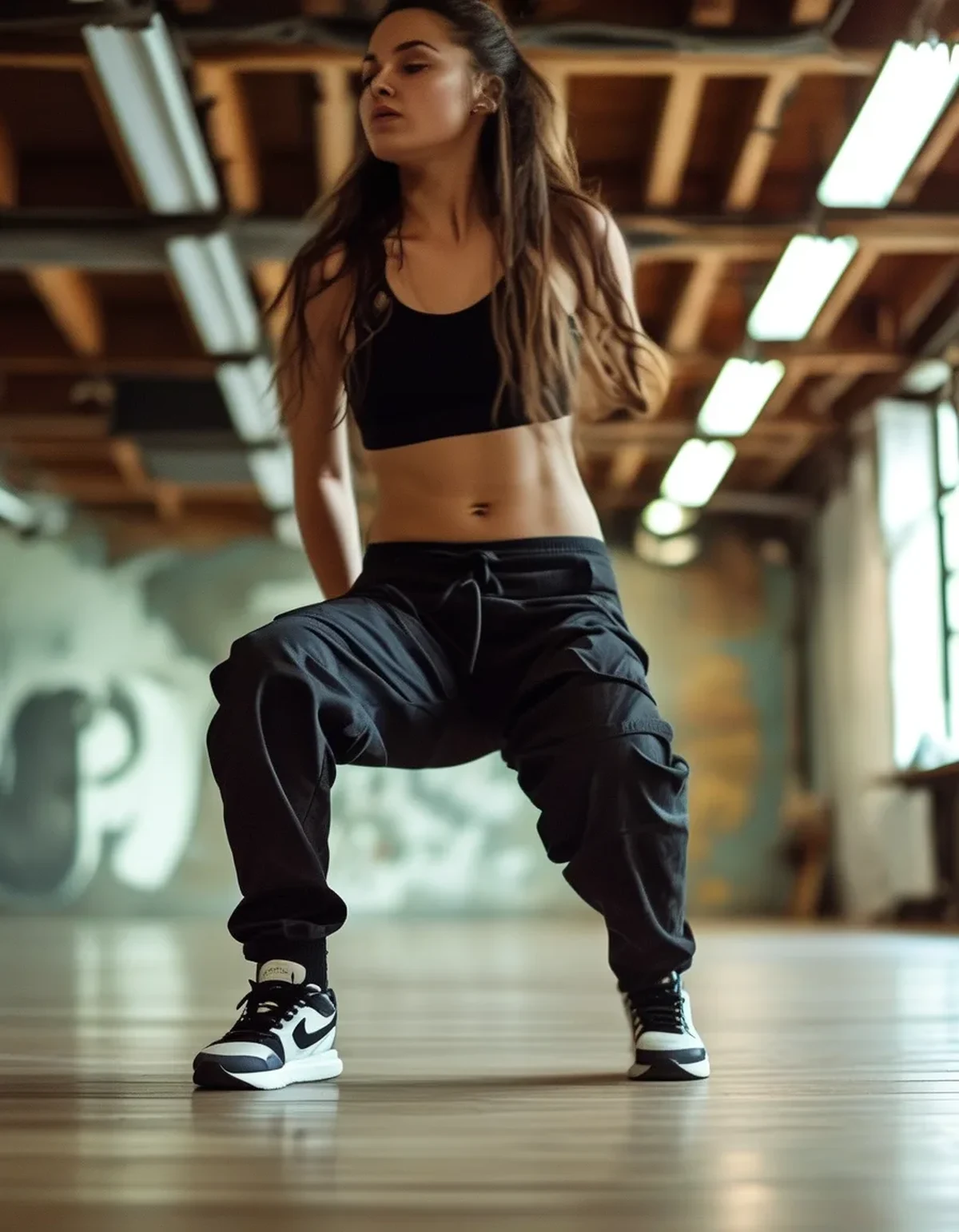
Running shoes are engineered for linear forward motion with elevated cushioned heels and grippy outsoles designed to prevent any sliding — both features work directly against hip-hop’s pivots, spins, and quick lateral direction changes. That aggressive grip that’s great for a straight-line run can catch your foot mid-turn and throw off your balance or even cause ankle strain.
The elevated, curved heel design (meant to encourage a rolling heel-to-toe running stride) also changes your center of gravity in a way that makes flat-footed hip-hop stances feel less stable than they would in a flatter shoe.
What should you actually look for in a hip-hop dance shoe?
A flatter sole with moderate, balanced grip — enough traction to push off and stop control but not so much that pivots catch — plus a flexible forefoot that lets your foot bend naturally through footwork patterns. Many dancers gravitate toward classic flat-soled skate shoes or dedicated dance sneakers for exactly this reason.
Sole material matters more than brand name here: a smoother rubber or suede-based sole tends to allow controlled sliding and pivoting better than the deep, aggressive tread patterns found on trail or running shoes.
Myth vs Fact: Hip-Hop Dance Footwear
Myth: More grip is always better for dance footwork. Fact: Too much grip prevents the controlled slides and pivots that are core to hip-hop technique, and can actually increase injury risk during quick turns.
Myth: Any flat sneaker works fine as long as it’s comfortable. Fact: Sole flexibility and grip balance matter specifically — a comfortable but stiff-soled shoe can still restrict footwork range of motion.
5 Signs Your Shoes Are the Problem, Not Your Technique
1. You catch or stick mid-pivot in a move that feels fine when practiced in socks on a smooth floor.
2. Your feet feel unusually fatigued from fighting shoe resistance rather than muscular effort.
3. You notice better footwork in one pair of shoes versus another you own, unrelated to the day’s difficulty.
4. Your ankles feel unstable specifically during turns, not during straightforward steps.
5. Instructors or more experienced classmates comment on your footwear when troubleshooting a specific move with you.
FAQ: Hip-Hop Dance Shoe Questions, Answered
Do I need dedicated dance sneakers, or can regular sneakers work?
Regular flat-soled sneakers with moderate grip and a flexible forefoot can work fine — you don’t necessarily need dance-specific branding, just the right sole characteristics.
Are high-top sneakers better or worse for hip-hop dance?
It varies by personal ankle mobility preference — some dancers like the support, others find high-tops restrict quick ankle articulation needed for certain footwork styles.
How can I test if a shoe works before committing to it for class?
Try a few basic pivots and slides on a similar studio-type floor in the shoe before buying, if the store allows it, or check the return policy so you can test in an actual class.
TL;DR:
- Running shoes’ aggressive grip and cushioned heel actively work against hip-hop pivots and slides
- Look for a flatter sole with balanced (not maximum) grip and a flexible forefoot instead
- Too much traction can catch mid-turn and increase injury risk, not just limit style
- If footwork feels stuck specifically during pivots, check your shoes before assuming it’s technique.
Keep Reading
This article is for general informational and styling purposes only. Fit, sizing, and product availability may vary.