Why 'No Rhythm' Is Rarely the Real Reason Beginners Struggle With Hip Hop
New hip hop dance students often assume they simply lack rhythm and give up before ever training the actual skill involved. Musicality is trainable in the same way choreography is, and most beginner struggles trace back to a specific, fixable gap rather than an innate deficit.

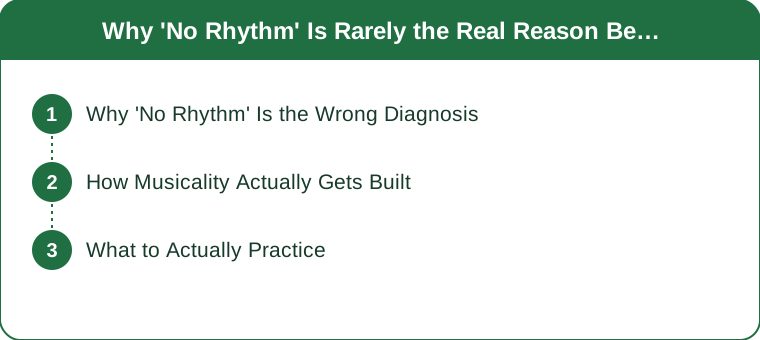
Why ‘No Rhythm’ Is the Wrong Diagnosis
The actual skill gap: the the-beat-identification-vs-feel (many beginners actually struggling to consciously identify the beat structure within a song, which is a specific, learnable skill, not a vague sense of ‘feel’ someone either has or doesn’t), the the-movement-to-count-mapping-issue (the real difficulty often being mapping specific movements to specific counts within a phrase, a mechanical skill that improves with directed practice, not an innate trait), the the-genre-specific-listening-gap (hip hop specifically layering rhythm in ways — syncopation, off-beat accents — that differ from more straightforward pop rhythms, meaning experience with one doesn’t automatically transfer).
How Musicality Actually Gets Built
The trainable components: the the-isolated-clapping-practice (practicing clapping or stepping to just the beat of a song, separate from any choreography, building the beat-identification skill in isolation before adding movement complexity), the the-slow-count-breakdown (breaking choreography down count by count at a slow tempo, explicitly connecting each movement to its count, rather than trying to feel the whole phrase at once), the the-genre-immersion-effect (regularly listening to hip hop specifically, not just music in general, building familiarity with its particular rhythm patterns over time).
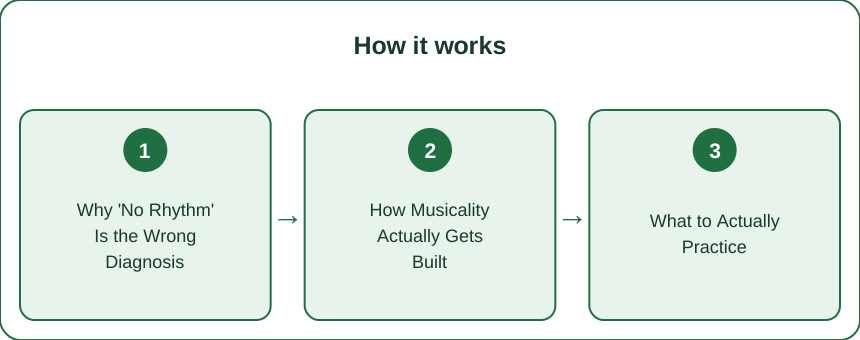
What to Actually Practice
The practical approach: the the-count-out-loud-technique (counting choreography out loud while practicing being one of the most effective direct ways to build the movement-to-count connection), the the-patience-with-the-timeline (musicality improving measurably over weeks of directed practice for most beginners, meaning the early struggle is a timeline issue, not a ceiling), and the frame (rhythm in hip hop dance is a specific, practiced skill — beat identification and count-mapping — not a fixed trait someone either has or lacks)).
New hip hop dance students often write themselves off as having no rhythm and quit before training the actual skill involved, but musicality breaks down into specific, learnable components rather than being an innate trait. The real beginner struggle is usually beat identification — consciously locating the beat structure within a song — and mapping specific movements to specific counts within a phrase, both mechanical skills that improve with directed practice, especially for hip hop’s syncopated, off-beat rhythm patterns that differ from more straightforward pop music. Practicing clapping or stepping to just the beat, breaking choreography down count by count at a slow tempo, and counting out loud while practicing all build the connection directly, and most beginners see measurable improvement over weeks. Why ‘No Rhythm’ Is Rarely the Real Reason Beginners Struggle With Hip Hop comes down to a trainable skill gap, not a fixed ceiling.
Keep Reading
This article is for general informational and styling purposes only. Fit, sizing, and product availability may vary.