Why You Look Stiff in Hip-Hop Class (Even When You Know the Steps)
Quick Answer: Looking stiff usually means you’ve memorized the steps but not the underlying groove — the continuous bounce and weight shift that should run underneath every move. Practice isolating the bounce with no arm movement first, then layer choreography back on top of it.
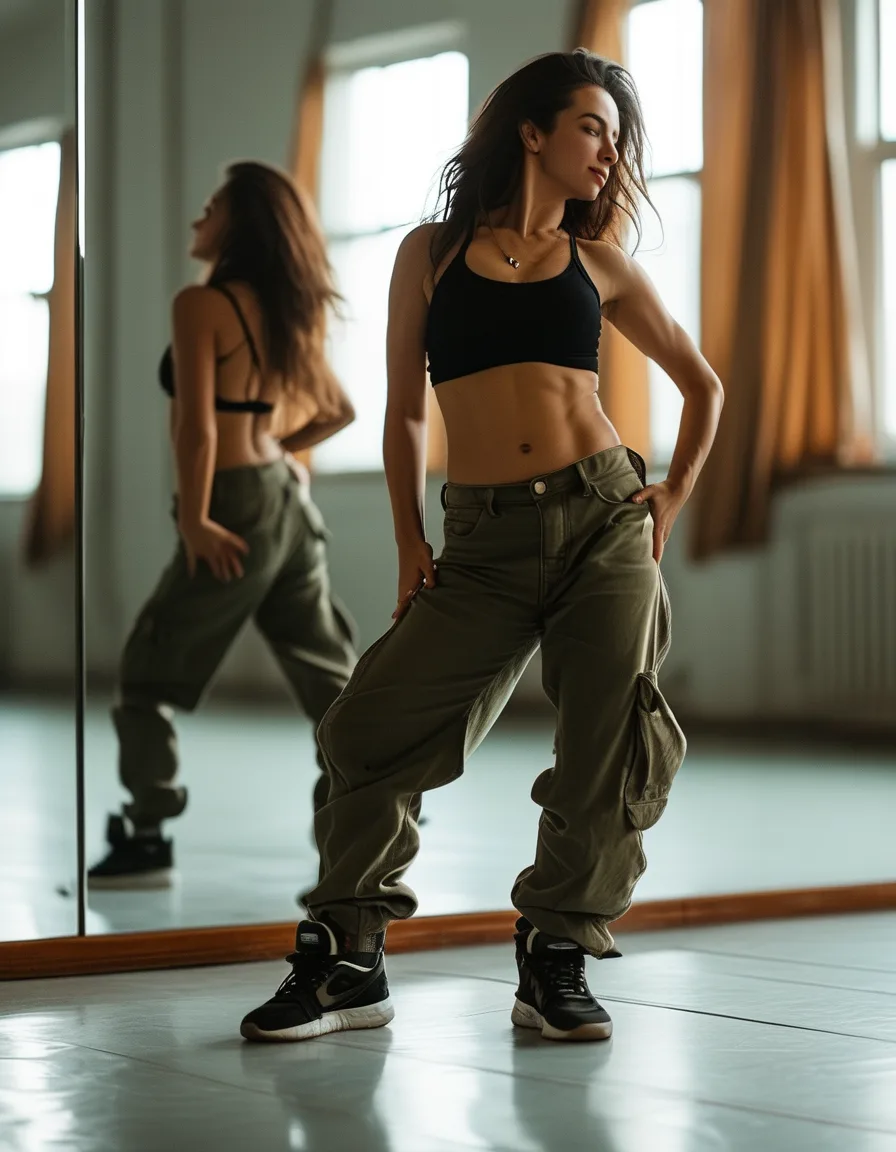
You know every count of the routine. You can call out the steps in order. And somehow, watching yourself in the mirror, you look like you’re performing a checklist instead of dancing. That gap has a name, and it’s fixable.
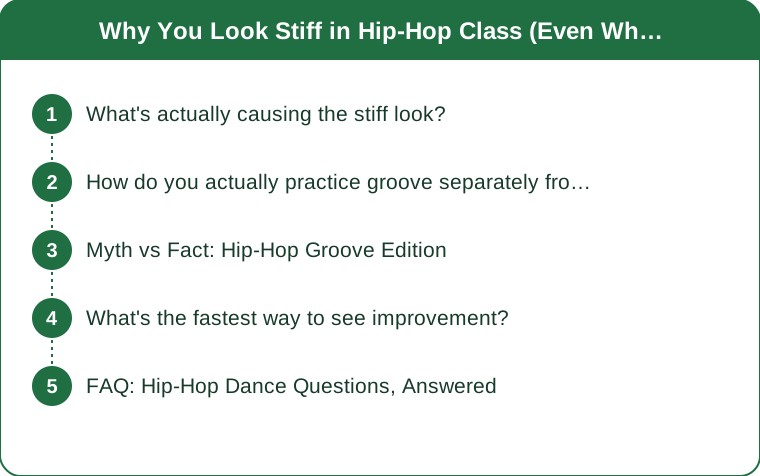
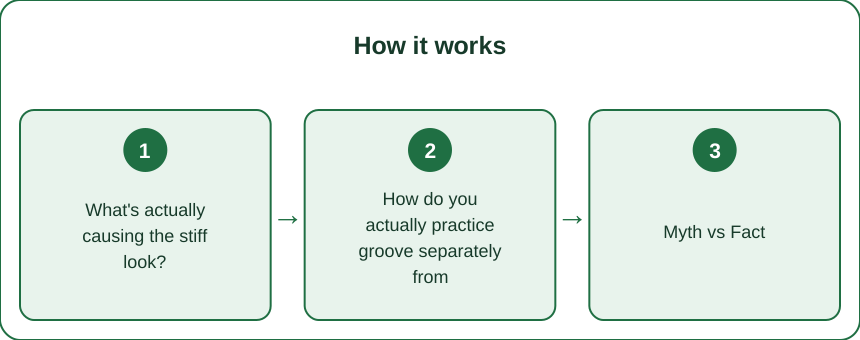
What’s actually causing the stiff look?
It’s almost always missing groove — the continuous, subtle bounce (often tied to the kick drum) that should run underneath every step, even the ones where your feet aren’t moving much. Beginners nail the big movements (arm hits, footwork) but let the bounce stop between them, which reads as robotic even with perfect technique.
How do you actually practice groove separately from choreography?
Turn on a track and do nothing but the bounce for 2-3 minutes — no arms, no fancy footwork, just finding and holding the pulse in your knees and hips. This feels boring and too simple. That’s exactly the point: once the bounce is automatic, choreography layers on top of it instead of replacing it.

Myth vs Fact: Hip-Hop Groove Edition
Myth: Groove is natural talent you either have or don’t. Fact: Groove is a trainable skill built through isolated bounce practice, same as any other movement pattern — most dancers who ‘have it’ built it through hundreds of hours of exactly this drill.
Myth: Bigger movements always look better. Fact: Musicality — hitting the right movement at the right micro-moment in the beat — reads as more skilled than movement size, even to untrained eyes.
Myth: You need to master steps before working on groove. Fact: Groove-first, then steps, produces more natural-looking dancers — steps without groove is exactly the ‘stiff’ look you’re trying to fix.
What’s the fastest way to see improvement?
Film yourself doing the routine, then film yourself doing 60 seconds of pure bounce with no choreography. Most beginners are shocked at how much more natural the simple bounce looks than their ‘harder’ routine — that gap is your practice roadmap. Spend 5 minutes of every practice session on groove-only before adding steps back.
FAQ: Hip-Hop Dance Questions, Answered
How long does it take to stop looking stiff?
Most beginners see a noticeable shift within 3-4 weeks of adding dedicated groove practice, faster than trying to fix it through choreography repetition alone.
Does watching more hip-hop videos help?
It helps your eye recognize good musicality, but it doesn’t train your body — pair watching with the physical bounce drill for it to translate.
Is it normal to feel self-conscious doing the bounce drill alone?
Completely normal — it feels exaggerated and silly at first precisely because you’re isolating something usually hidden under other movement. That’s a sign you’re doing it right, not wrong.
TL;DR:
- Stiffness usually means missing groove underneath the steps, not bad technique
- Practice the bounce alone, no arms or footwork, for 2-3 minutes before adding choreography
- Groove is trainable, not innate talent — hundreds of dancers built it through this exact drill
- Film both your bounce-only practice and your routine to see the gap clearly
Keep Reading
This article is for general informational and styling purposes only. Fit, sizing, and product availability may vary.