Why Your Arms Look Wrong in Hip-Hop Choreography
Quick Answer: Beginner arms usually look wrong for three reasons: they arrive at the shape and freeze instead of continuing to move, they are driven from the hand instead of from the back and shoulder, and they hit at exactly the same instant as the legs instead of a fraction behind. Fixing the third one alone changes how the whole phrase reads.
The steps are usually fine. The arms are what tells the room whether you have been dancing for two months or two years.

Why do arms look stiff even when they are in the right position?
Because position is not the thing being read. Movement quality is.
A shape held rigidly reads as a photograph. The eye interprets tension in a limb as effort, and effort reads as beginner. What experienced dancers do differently is not more accurate positions — it is that the limb is still alive between positions.
The mechanical difference: a stiff arm is held by co-contracting the muscles on both sides of the joint, essentially bracing. A relaxed arm reaching the same position is driven by the muscles that produce the movement while the opposing ones stay loose. The end position looks similar in a photo and completely different in motion.
Where the tension usually lives: the shoulders creeping toward the ears, the hands clenched into fists, and the elbows locked straight. All three appear the moment someone is concentrating on remembering the choreography, which is exactly when you cannot spare attention for them.
A practical drill: run a phrase you already know at half speed with the specific instruction to keep your hands soft and your shoulders down. Do it four times. You are not learning the choreography, you are teaching your body what the phrase feels like without the bracing.
Why this matters more in hip-hop than in some other styles: the aesthetic is built on groove and weight, and both require the body to be loose enough to move through positions rather than snapping between them.
Where should arm movement actually start?
In the back, and this is the single biggest technical correction most beginners need.
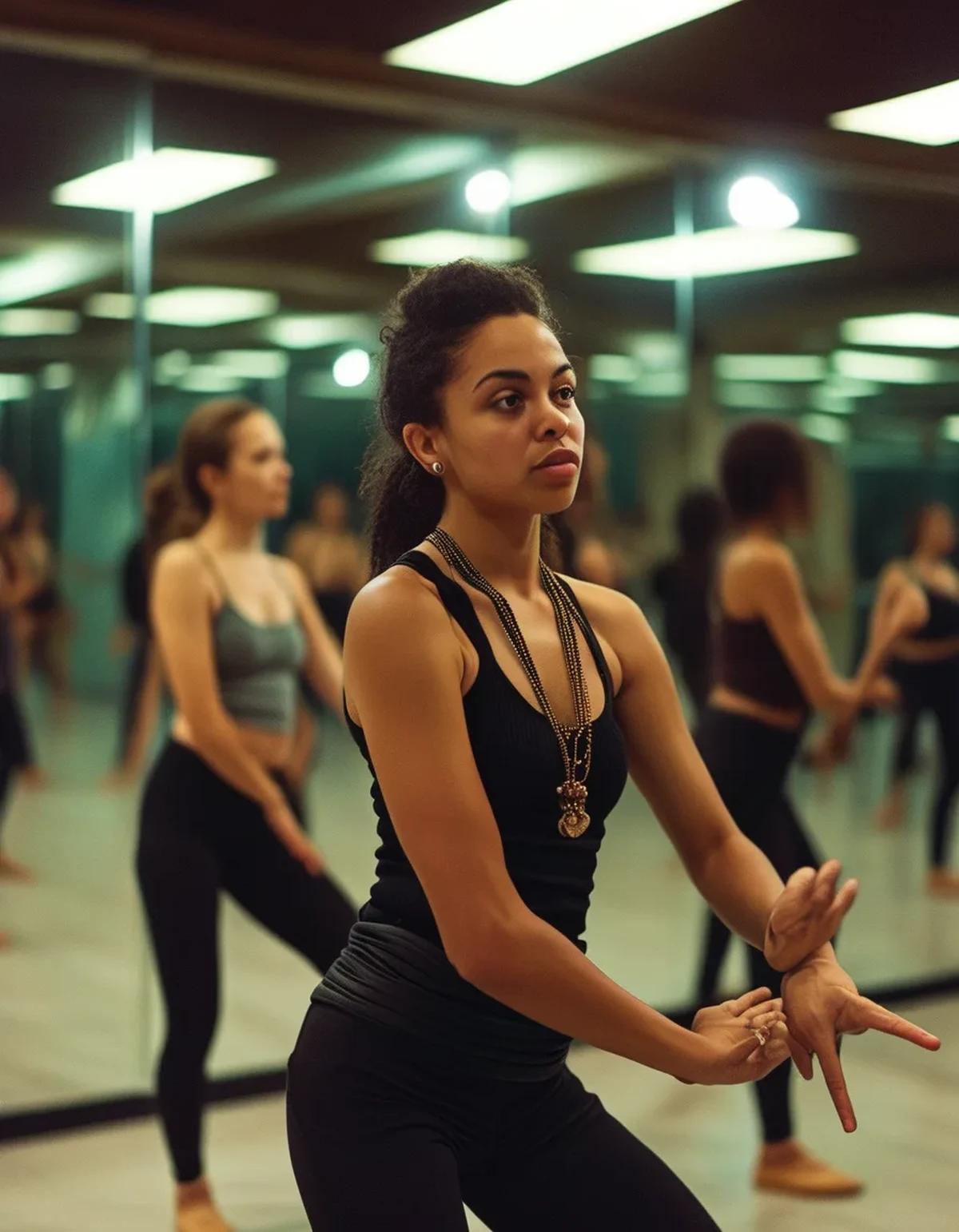
What beginners do: move the hand, and let the arm follow. The result is a limb that looks disconnected from the torso, moving as an attachment rather than as part of the body.
What trained dancers do: initiate from the shoulder blade and the lats, so the movement travels outward from the center and the hand arrives last. The same arm path looks entirely different depending on where it started.
How to feel the difference: stand and reach one arm out to the side, deliberately moving the hand first. Then reset, and reach again by first sliding your shoulder blade, then letting the arm and hand travel out from that. The second version feels heavier and looks fuller.
Why this reads as better: it engages the torso, which means your whole body participates in the movement rather than just a limb. Hip-hop is a full-body style, and an arm that moves independently of the torso announces itself immediately.
A cue that works for a lot of people: think of moving your elbow rather than your hand. The elbow is closer to the center, so leading with it naturally recruits the back.
Why does hitting exactly on the beat look wrong?
Because the body does not move as a single rigid unit, and pretending it does looks mechanical.
When a real body moves, mass travels through it in sequence. The torso initiates, the shoulder follows, the arm follows the shoulder, and the hand arrives last. That sequencing takes fractions of a second, and the eye recognizes it as natural movement.
When a beginner hits every joint at the same instant, the result reads as robotic — which is a legitimate style when it is intentional and looks like an error when it is not.
The adjustment: let the arms arrive a hair behind the legs. Not late, not a different count — the same beat, with the hand finishing at the very end of it. This is often called follow-through or delay, and it is the difference that makes choreography look like dancing rather than like positions executed on time.
How to practice it: take one 8-count you know well. Do it hitting everything simultaneously, then do it letting the hands finish just after the feet. Film both on your phone. The difference is far more obvious on video than in the mirror, and this is the drill that produces the fastest visible improvement for most people.
Where not to apply it: hard stylized hits, pop-and-lock elements and certain isolations are meant to be simultaneous and sharp. Follow-through is a default, not a universal rule. Watching what the choreographer’s arms do — rather than only where they end up — is how you tell which one a phrase wants.
5 Mistakes Everyone Makes With Arms in Class
1. Learning the footwork first and adding arms later. This trains a separation between the two that then has to be undone. Learn them together from the first repetition, even if both are rough. Arms bolted on afterwards always look bolted on.
2. Watching your hands in the mirror. Your eyes follow your hands, which drops your head and kills the line through your neck and chest. Watch the whole body in the mirror, or better, look where the choreography says to look and check the mirror only between runs.
3. Making every arm movement the same size. Dynamics are what make a phrase interesting — some movements are big and full, some are small and contained. Beginners tend to run everything at one volume, usually a cautious medium, which makes even good choreography read flat.
4. Forgetting the hands themselves. The hand at the end of an arm is part of the shape. Flopping hands, half-curled fingers and hands that go limp at the end of a movement undercut everything the arm just did. Decide what the hand is doing and do it deliberately.
5. Holding the breath. Almost universal when concentrating, and it directly produces the shoulder tension in mistake one. If you notice your shoulders creeping up during a run, the fix is usually breathing, not a shoulder correction.
FAQ: Hip-Hop Arm Questions, Answered
How long does it take for arms to stop looking stiff?
With deliberate practice, most people see visible change in four to eight weeks. The change is faster if you film yourself, because the gap between what you feel and what you look like is where the work actually is.
Should I practice arms without the footwork?
Occasionally, yes — isolating the arms at half speed to learn the pathway is useful. But return to the full phrase quickly. Arms practiced entirely in isolation tend to stay isolated when the feet come back.
Why do my arms look fine at half speed and wrong at tempo?
Because tension increases with speed and with pressure. If half speed looks good, the pathway is correct and the problem is bracing under tempo. Build speed gradually — 75 percent, then 85, then full — rather than jumping from half to performance speed.
Is it worth taking a different style to fix this?
Many hip-hop dancers find that a few weeks of something like jazz funk, house or even basic contemporary noticeably improves arm quality, because those styles put more explicit attention on the upper body. It is not required, and it is a genuinely effective shortcut if you have the time.
TL;DR:
- Stiffness comes from co-contracting and bracing, which shows up as raised shoulders, clenched hands and locked elbows.
- Initiate arm movement from the shoulder blade and back, and think about moving the elbow rather than the hand.
- Let the hands finish a fraction behind the feet — same beat, later arrival — unless the phrase calls for a sharp simultaneous hit.
- Learn arms and footwork together from the first repetition, never bolted on afterwards.
- Film yourself; the gap between how it feels and how it looks is where all the improvement lives.
The steps get you through the phrase. The arms are what makes it read as dancing.
Keep Reading
This article is for general informational and styling purposes only. Fit, sizing, and product availability may vary.